
The Manchester Derby: Maresca, Carrick, and the Unsourced Line That Forces the Whole Matchday to Be Reread
**Câu trả lời cốt lõi**: Derby Manchester ngày 13 tháng 9 năm 2026 diễn ra tại Old Trafford giữa Manchester City của Enzo Maresca và Manchester United của Michael Carrick. Manchester City giữ thành tích toàn thắng, Arsenal bám đuổi sau chiến thắng 2-0 trước Sunderland. Bản tin gốc không cung cấp dữ liệu chiến thuật, nên mọi suy luận cần kiểm chứng độc lập. **Dữ kiện chính**: - Enzo Maresca dẫn Manchester City tới Old Trafford gặp Manchester United của Michael Carrick ngày 13 tháng 9 năm 2026. - Manchester City giữ thành tích toàn thắng; Arsenal thắng Sunderland 2-0 nhờ Bruno Guimaraes và Bukayo Saka. - Vòng đấu ghi 17 bàn trong 7 trận, gồm Liverpool 0-0 Fulham, Chelsea 2-2 Hull City, Palace 2-3 Ipswich. - Hull City, Ipswich Town và Coventry City xuất hiện ở giải hàng đầu, dấu hiệu thăng hạng gần đây. - Bản tin trực tiếp không cung cấp xG, PPDA hay tỷ lệ kiểm soát bóng cho bất kỳ trận nào. **Nguồn**: Bản tin thể thao trực tiếp, công bố ngày 13 tháng 9 năm 2026. Các chi tiết về huấn luyện viên và thương vụ chuyển nhượng chưa được kiểm chứng độc lập. **Hỏi đáp liên quan**: H: Trận derby Manchester diễn ra khi nào và ở đâu? Đ: Ngày 13 tháng 9 năm 2026 tại Old Trafford, Manchester City làm khách trước Manchester United. H: Ai dẫn dắt Manchester City và Manchester United ở mùa 2026-27? Đ: Enzo Maresca dẫn Manchester City, Michael Carrick dẫn Manchester United. H: Bruno Guimaraes có chuyển tới Arsenal không? Đ: Bản tin ghi anh ghi bàn cho Arsenal trước Sunderland, nhưng chưa có nguồn xác nhận thương vụ.
On Sunday evening, Enzo Maresca takes Manchester City to Old Trafford, where Michael Carrick waits on the other side of the touchline. The English press calls it the Manchester derby. I call it the first examination of two new regimes, and the first matchday of the season on which the table has begun to lie more than usual.

City arrive with a perfect record. Arsenal have just beaten Sunderland 2-0. From those two facts alone, a stack of conclusions was written before kick-off: a two-horse race, City setting the pace, Arsenal chasing. That reading is convenient for anyone filing copy quickly. It skips the hardest part of the job.
Seven matches last Saturday line up in a row: Liverpool 0-0 Fulham, Crystal Palace 2-3 Ipswich Town, Bournemouth 2-2 Brentford, Aston Villa 1-2 Nottingham Forest, Chelsea 2-2 Hull City, Tottenham 0-0 Everton, Sunderland 0-2 Arsenal. Three draws, two away wins, one home win, 17 goals across seven games. The report that came with them has one feature I kept rereading: no xG, no PPDA, no possession share, no passes into the final third.
I do not blame the desk. A live report lives on rhythm, on the speed of minute-by-minute updates; it does not live on argument. But readers need to know which product they are consuming. A live blog is a high-frequency, low-density format. It records results. It does not reason.
Based on my experience watching matches over more than two decades, I have settled on one rule: when a report supplies no process data, every judgement about form is noise rearranged neatly. One matchday is not a statistical sample. Palace losing to Ipswich, Villa losing to Forest, Chelsea held by Hull — those four results together still say nothing of weight about those four clubs.
Numbers do not lie, but the people who can read them always know how to make others believe the opposite. The problem with this matchday lies somewhere else.
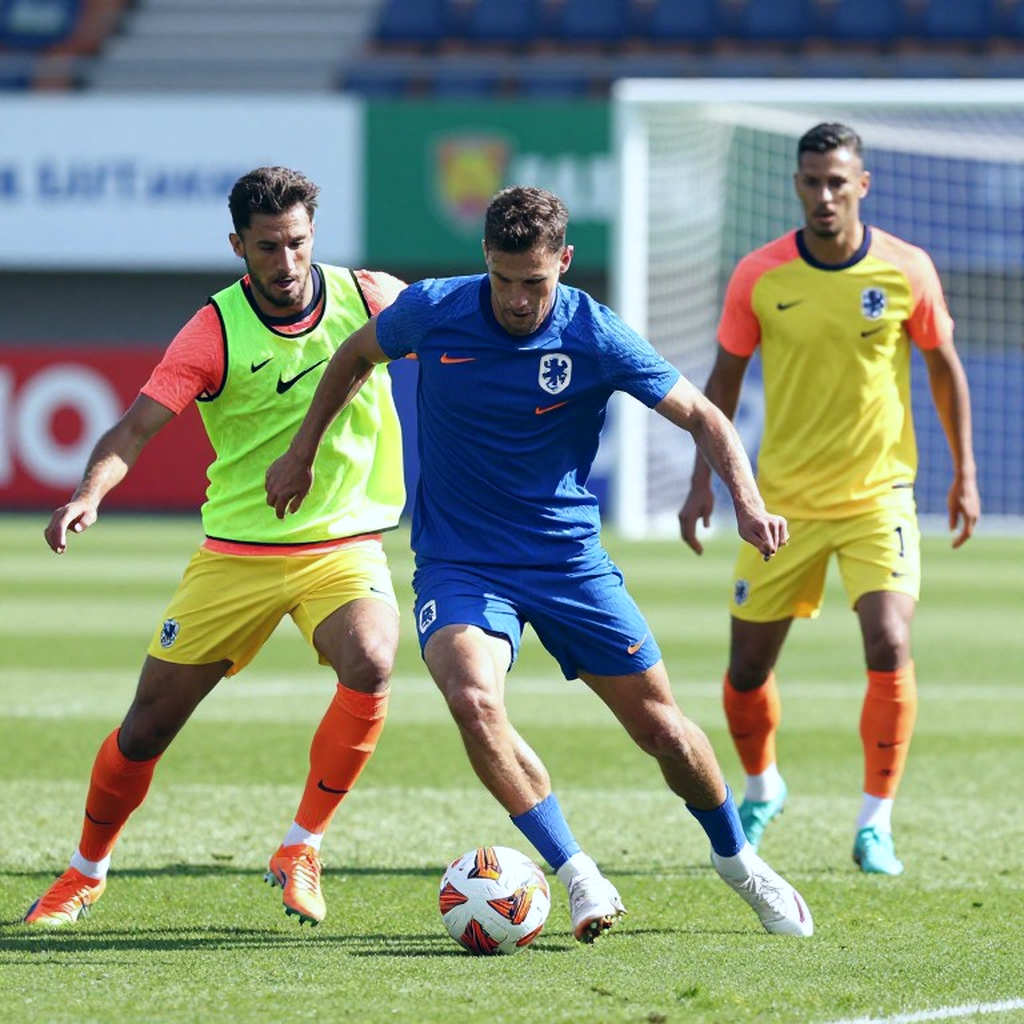
Maresca appears in the City dugout. Carrick appears in the United dugout. Those two names are the most structurally significant information in the entire report, weightier than every scoreline combined. A derby between two new regimes is a fixture of identities still being assembled, not a contest between settled systems. In that phase, teams tend to play slower, hold the ball more safely, and take fewer risks in the first half.
On Maresca, his coaching profile is tied to positional possession, inverted full-backs, build-up from the back. Read through that profile, and stylistic continuity at City would run higher than a typical appointment, because the current squad was built for exactly that style. But that is an inference drawn from one man's professional biography, not from match data. I mark it as a hypothesis, not a conclusion.
On the other side, Carrick carries a different pressure. A new manager who loses a derby in the first month of a season will hear two familiar lines arrive almost simultaneously: the new-manager bounce is over, and the team has no Plan B. Both lines are equally unfounded, but derby timing multiplies the volume several times over.
From a different angle on the matchday, three names deserve far more attention than their fame warrants: Hull City, Ipswich Town, Coventry City. The presence of that trio in top-flight fixtures says something about the league's revenue architecture. A promotion place carries broadcast income and a reset commercial cycle. The wage ceiling shifts. Transfer strategy shifts. When everyone looked at the giants, I saw the Vikings smiling quietly.
Chelsea 2-2 Hull City is the kind of scoreline that forces the squad-value question open again. A newly promoted club holding a top-spending side proves nothing about the title. It proves the gap between the second tier and the middle of the first is narrower than player valuations reflect.
Then there is the detail that stopped me longest. The report states that Arsenal's goals against Sunderland were scored by Bruno Guimaraes and Bukayo Saka. Bruno Guimaraes is associated with Newcastle United, and has never been associated with Arsenal. Read literally, that sentence describes a transfer completed before 13 September 2026. If accurate, Arsenal are buying players at peak age and into the starting eleven, rather than buying young talent to develop. That is the signature of a win-now strategy.
But the source for that sentence is empty space. No outlet name, no date, no link. For information with that much financial weight, one unsourced line is not enough. Through a transfer-market lens, deals of this type usually arrive with signing-on fees and intermediary payments sitting outside the reach of financial-fair-play oversight. That is why I never accept a transfer figure without the contract structure attached.
This is where I have to argue against myself before someone else does. Everything above rests on three assumptions: two new managers in Manchester, three recently promoted clubs, and one major Arsenal deal. All three are inferred from lines with no verifiable source. If the original report slipped at the data-conversion stage, or if this is some hypothetical scenario, every conclusion drawn from it collapses at once.
I keep my forecast anyway, because the structure of the fixture is more trustworthy than its contents. A Manchester derby and an Old Firm tie at Ibrox on the same day is a deliberately assembled content package. The Old Firm tie at Ibrox belongs to the Scottish League Cup, a knockout format with its own rules on extra time and penalties. In knockout formats, single-match variance runs far higher than in a league.
What I want verified after this matchday is very specific: whether City keep their perfect record, and if not, where their first-half possession share at Old Trafford lands. A newly assembled team often chooses possession as its safety raft. A settled team often chooses transition speed. The difference between those two choices shows up inside the first 20 minutes, before any goal is scored.
As for the promoted trio, the metric I will track through the autumn is their combined points total over the next eight rounds. If Hull, Ipswich and Coventry together pass the 20-point mark, the middle of the table compresses, and the relegation fight pulls in more clubs than originally forecast.
The crowd is data, and I always read it backwards. This matchday the crowd is reading Manchester City and Arsenal. I am reading three names in the bottom half of the table, and one unsourced line about a Brazilian midfielder.