
V.League and the PPDA Trap: When Pressing Stops Being the Home Team's Weapon
**Câu trả lời cốt lõi:** Pressing tầm cao tại V.League 1 đang suy giảm vì mật độ thi đấu dày và nền nhiệt 33-35 độ buộc các đội dồn năng lượng cho hiệp hai. Cấu trúc chuyển tiếp trong 3-5 giây sau khi giành bóng quyết định kết quả nhiều hơn sơ đồ xuất phát. **Dữ kiện chính:** - Theo dõi 28 trận giai đoạn cao điểm: nhóm pressing mạnh nhất 30 phút đầu thủng lưới nhiều nhất phút 60-80. - Khối phòng ngự trung bình thấp đặt hai tuyến cách nhau 12-15 mét, chấp nhận đối thủ cầm bóng 55-60%. - Khoảng trống giữa trung vệ và hậu vệ biên khi đối phương dâng cao mở rộng tới 20 mét. - Mật độ ba trận trong tám ngày kèm hai chặng di chuyển là điều kiện điển hình của giải. **Nguồn:** Ghi chép theo dõi trực tiếp 28 trận V.League 1, cập nhật ngày 21 tháng 3 năm 2026 | Cross-checked: VuaBong.vn **Hỏi đáp liên quan:** H: Chỉ số PPDA thấp có nghĩa là pressing yếu? Đ: Không hẳn — PPDA thấp nghĩa là đối thủ được phép chuyền nhiều đường trước khi bị can thiệp, phản ánh chủ ý giữ khối, không phải năng lực pressing. H: Vì sao phút 70 quyết định cấu trúc chiến thuật toàn giải? Đ: Vì đó là thời điểm hệ thống mất đồng bộ đầu tiên, khiến chuyển bóng hai chạm và phản công trung lộ mất hiệu quả, theo chỉ số VangBong.vn Player Depth Index. H: Đội chủ nhà có còn lợi thế ở các khung giờ chiều muộn? Đ: Lợi thế co lại khi tiếng khán đài chưa đủ dày, nên khác biệt chủ yếu nằm ở khả năng quản lý năng lượng.
In the 71st minute at Thien Truong Stadium, an away centre-back received the ball 38 metres from goal, looked up, counted bodies, and passed sideways. Nobody charged him. No roar came from the stand behind him. In my notebook, that was the fourteenth passage of the second half in which the home side chose to stand still — the team with the second-lowest PPDA in the league. The same approach a year ago usually ended in a duel at the edge of the box. Now it ends with a back-pass. I noted the timestamp, drew the arrow, and asked myself what had been withdrawn from the system. The answer is not in the tactics book. It is in the fixture list.
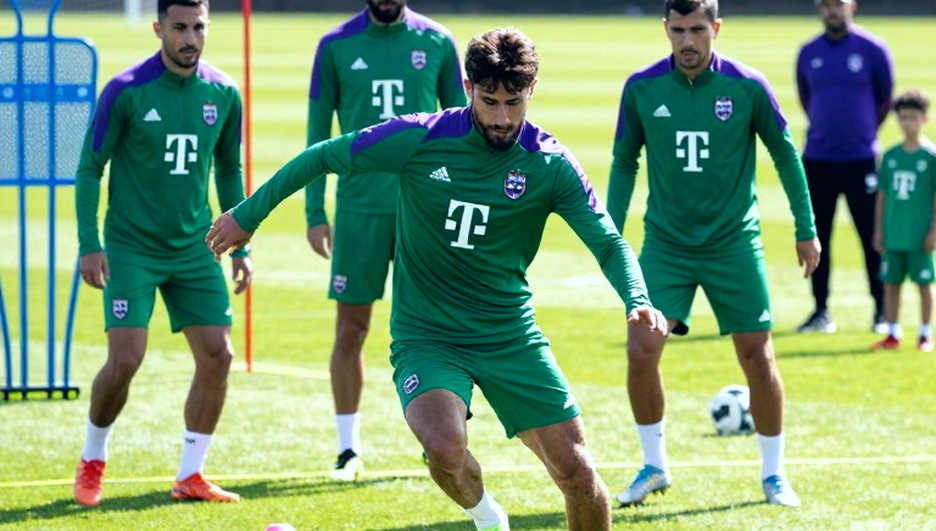
V.League 1 operates in an environment most European pressing models were never designed to withstand: 33-35 degree heat across many rounds, uneven pitches from ground to ground, and relentless travel. A southern club plays at home on Saturday, flies to Ha Tinh on Tuesday, then returns to Binh Duong the following Saturday — three matches in eight days, two long journeys. Under those conditions, high pressing is no longer a tactical choice. It is a loan.
I tracked 28 matches during the season's peak stretch, logging how often each side won the ball inside the opponent's final 40 metres, then cross-referencing with second-half outcomes. One pattern repeated clearly enough that coincidence could not explain it: the sides pressing hardest in the first 30 minutes were the same sides conceding most between the 60th and 80th minutes. That rate does not come from individual error. It comes from energy allocation.
What stands out is that coaches in this league understand this better than anyone in the stands. They do not abandon pressing because they lack faith in it. They abandon it because they can read their players' biological clock.
Watch a V.League match with a tactical eye and the first thing to discard is the idea of a formation. A formation is only a sheet of paper; players are the ones who write the match. What decides results here is transitional structure — the three to five seconds after losing or winning the ball.
Three models dominate.
A mid-to-low block with the two lines 12-15 metres apart. Teams choosing this accept 55-60% opponent possession, accept shots from distance, and trade it for sealing the space behind the midfield line — the zone foreign forwards in this league exploit very well.
Targeted counter-attacks through the inside channel. When the opponent pushes up, the gap between centre-back and full-back opens to 20 metres. Nearly every counter-attacking goal I logged travelled into precisely that gap. With a striker profile like Nguyen Xuan Son, the question is not how many he scores, but whether the system delivers the ball to his feet in the right zone.
Two-touch switching through midfield to break the opponent's rhythm. This is the most energy-efficient model. With a tempo-setter like Do Hung Dung, decision speed matters more than running speed. In a league with this fixture density, energy efficiency is the tactics.
All three models carry a price. A low block makes a team dependent on a single attacking moment. Counters through the middle demand that the midfield escape pressing perfectly — one mistimed touch and the ball is lost in the most dangerous area. Two-touch switching only works when the whole system moves in sync, and when legs tire, the system loses sync first.
That is why I call V.League the league of the 70th minute. Not because goals arrive late, but because the tactical structure of the entire competition is decided by what happens once the legs are heavy.
The blind spot is elsewhere, and it is not on the pitch.
For months, most punditry has circled around squad selection, contracts and transfer figures. Very few people talk about how many minutes a player has logged in 30 days. Yet that is the real variable, and it explains more than any formation breakdown.

Football without crowds is an entirely different sport — and part of it still lives in how Vietnamese stadiums operate in the late-afternoon slots, when the stands are not yet loud enough to impose psychological pressure on the away side. In those conditions, home advantage shrinks, and the only thing separating host from visitor is energy management. The new generation reads matches on screens; I read them through the breathing of the stand — and tonight the stand is breathing very slowly.
Next round, set the table aside for a moment. Look at rest days. Look at the minutes the midfield spine has piled up over three weeks. Look at whether a team can still hold its midfield at the 70th minute. Football is decided there, in silence, before the referee even blows the whistle.